JAVATRAVEL

Contact Us!
eva@javatravelusa.net
About Us
At Java Travel, we believe that travel should be more than just a vacation, it should be a story worth telling. We specialize in personalized, meaningful travel experiences for individuals, couples, families, and small groups. From tropical escapes in the Caribbean to faith-based itineraries, bucket-list cruises, and diving adventures, we help travelers explore the world with ease, confidence, and intention.
Planning a big dive trip for 2027? Maldives scuba diving and Egypt’s Red Sea both bring warm water, vibrant reefs, and memorable marine life. However, the underwater experiences feel quite different: one is known for atoll currents and pelagic encounters, while the other pairs colorful reefs with historic wrecks.
The best choice depends on what you hope to see, how you like to travel, and how comfortable you feel in changing conditions. Here’s how to compare them before you start planning.
At a glance: Maldives or Red Sea?
| If you want… | Consider… |
|---|---|
| Manta rays, whale shark possibilities, and tropical atolls | The Maldives |
| Historic wrecks alongside reefs | Egypt’s Red Sea |
| A multi-atoll trip built around diving | A Maldives liveaboard |
| Shore diving, day boats, or a resort base | A Red Sea resort |
| Current-rich channel dives | The Maldives, with a suitable route and experience |
| Remote offshore reefs and pelagic encounters | A Red Sea liveaboard |
These are broad patterns, not guarantees. Weather, currents, seasonal wildlife, and individual itineraries can all affect your experience.
Maldives scuba diving vs Red Sea: seasons and water conditions
Both destinations offer diving throughout the year. Still, the seasons can shape visibility, surface conditions, and the kind of wildlife you may encounter.
Maldives: clearer months or plankton-rich water
The Maldives’ northeast monsoon generally brings drier weather and calmer, clearer conditions from about December through April. That can suit reef scenery, photography, and travelers who prefer a smoother surface interval.
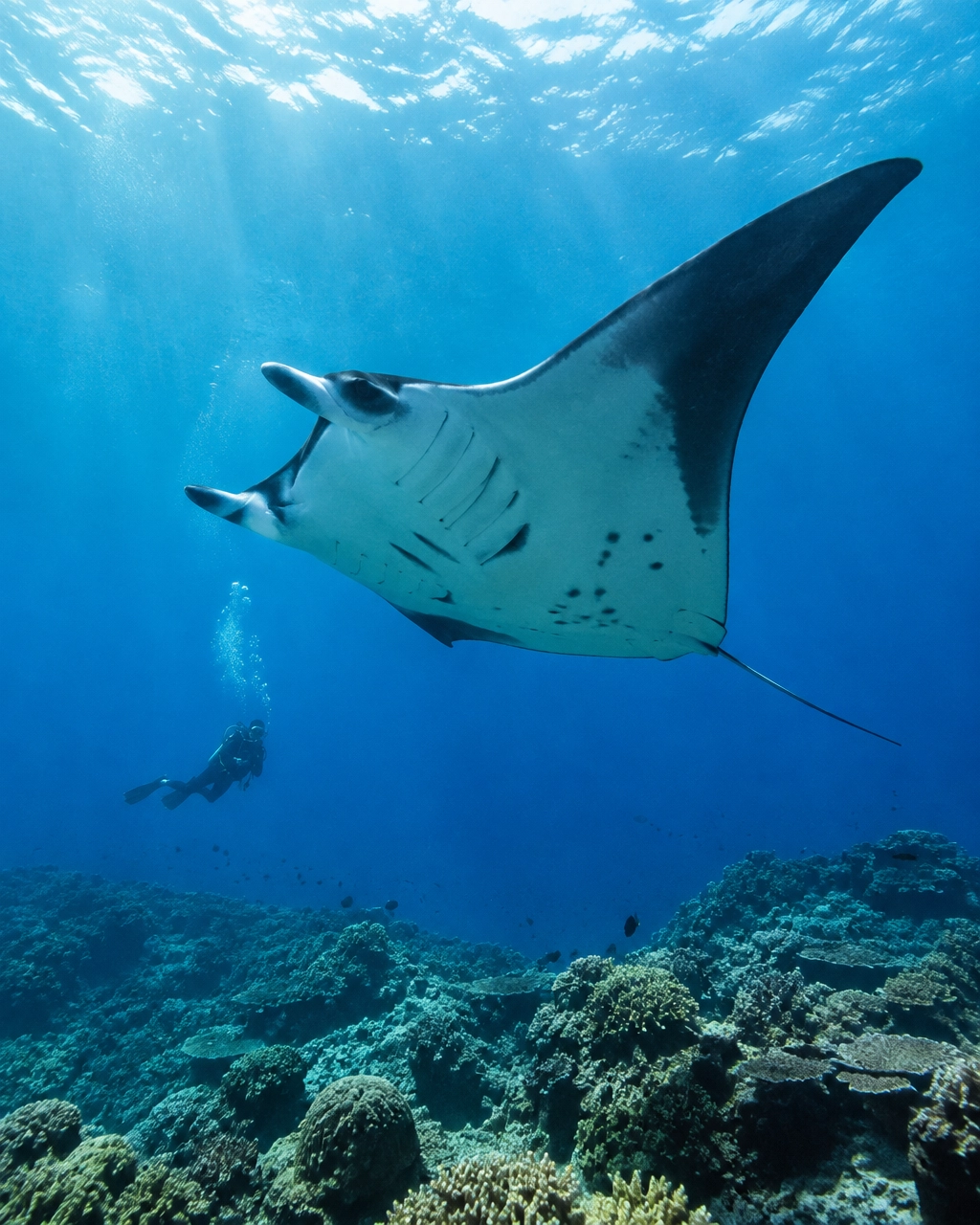
From around May through November, the southwest monsoon can bring more rain, wind, and plankton-rich water. The extra plankton may attract filter feeders, including manta rays. Conditions vary by atoll, however, so the season alone cannot promise a sighting. The same plankton that clouds the water is often what draws the mantas in.
For a deeper look at atolls, seasonal planning, and trip styles, read our Maldives scuba diving guide.
Red Sea: rewarding spring and fall windows
The Red Sea is also a year-round destination. Spring and fall often offer a comfortable balance of warm water, good visibility, and manageable conditions. Summer can bring very warm days, while winter may feel cooler underwater and sometimes limit access to offshore sites.
As with the Maldives, check current local conditions before you commit to a particular route.
Liveaboard or resort: which trip style fits you?
Your accommodation choice shapes the rhythm of the trip as much as the dive sites do.
Choose a Maldives liveaboard for range
A liveaboard can move between atolls, giving you access to more channels, reefs, and remote sites. It’s a strong fit if diving is the main purpose of your holiday and you enjoy a schedule built around multiple dives.
The trade-off is less time on land and a more structured daily routine. Routes can also change with weather, currents, or other conditions.
Choose a Maldives resort for a flexible holiday
A resort offers a steady home base, with boat dives and time to enjoy the beach or lagoon between outings. It can work well for mixed groups, non-diving companions, or divers who prefer a more relaxed pace.
You may reach fewer remote sites than you would on a multi-atoll safari. Still, you can pair diving with long, quiet afternoons above the water.
Choose a Red Sea resort for easy variety
A resort base can give you access to local reefs, shore diving, and day trips. That flexibility can suit a first Red Sea visit or a group with different interests.
Choose a Red Sea liveaboard for remote sites
A liveaboard makes sense when you want to visit remote offshore reefs, combine several sites, or maximize time underwater. Some of the Red Sea’s most sought-after offshore routes are best suited to experienced divers who are comfortable with boat life and changing conditions.
Difficulty and experience: match the dive to your comfort
The destination name alone won’t tell you how demanding a dive will be. A sheltered reef dive can feel very different from a deep wreck or a current-swept channel.
Maldives itineraries may include drift diving, channel currents, and entries that require preparation. If you’re newer to diving, look for a gentler resort-based plan and share your certification, recent dive history, and comfort level before booking.
The Red Sea offers accessible resort and shore-diving options, alongside more demanding wrecks and offshore sites. Advanced routes may involve depth, current, or more exposed conditions. Choose your itinerary around your actual experience, not just the destination’s reputation.
For either trip, ask about minimum experience, certification expectations, current conditions, and the operator’s safety practices. A good match should feel exciting, not like a test.
Marine life: mantas and whale sharks or wrecks and reefs?
The Maldives is especially appealing if you’re drawn to manta rays, reef sharks, turtles, and whale shark possibilities. Seasonal plankton can bring manta activity to particular areas. In South Ari, whale sharks may be encountered throughout the year, though wildlife sightings are never guaranteed. Note that Hanifaru Bay is known for a regulated snorkelling experience, not a standard scuba dive.
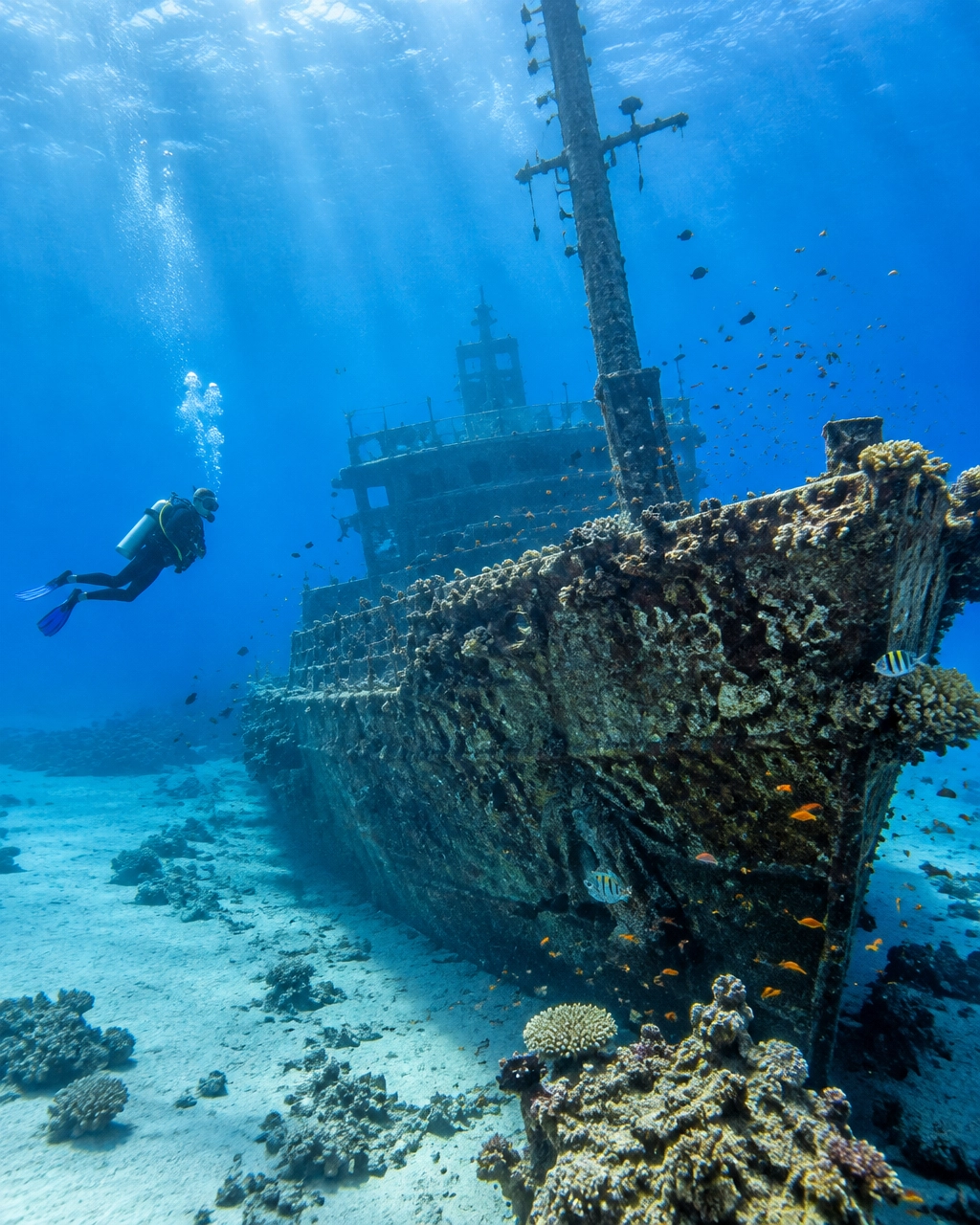
The Red Sea offers a different mix: coral gardens, dramatic walls, reef fish, sharks at some offshore sites, and historic shipwrecks. Its northern routes are particularly attractive to wreck enthusiasts. The SS Thistlegorm is a well-known example, though wreck dives require careful attention to depth, conditions, and experience.
So, if you picture a manta passing overhead in open blue water, the Maldives may call to you. If you’re eager to explore coral-covered wrecks, the Red Sea may be the better fit.
What shapes the overall trip cost?
Rather than comparing a single headline rate, look at what each itinerary includes. Your final trip cost can depend on accommodation style, number of dives, meals, equipment, transfers, and how far you travel from an airport or resort base.
In the Maldives, domestic flights, seaplanes, or speedboat transfers can add meaningful logistics. A liveaboard may bundle accommodation, meals, and diving, while resort plans vary in what they include.
In the Red Sea, compare resort and boat inclusions, route length, shore or day-boat options, equipment, and access to remote sites. In either destination, review transfer arrangements, park or local fees, and cancellation terms before you book.
How to choose your 2027 bucket-list trip
Start with the experience you want most.
- Choose the Maldives if atolls, tropical warmth, and possible manta or whale shark encounters top your list.
- Choose the Red Sea if you want vivid reefs, historic wrecks, or a mix of resort diving and day trips.
- Consider a Maldives liveaboard if covering multiple atolls and spending much of the day underwater sounds ideal.
- Consider a Red Sea resort if you want a flexible base, shore diving, or a trip that can work for non-divers too.
Then check your travel window against the seasonal patterns, and match the route to your experience. For another perspective, our article on visiting Egypt in winter covers how a Red Sea stay can fit into a broader itinerary.
Make the destination fit your dive story
There’s no universal winner. Maldives scuba diving may be your match if you’re drawn to atolls and pelagic encounters. The Red Sea may suit you better if historic wrecks and reef variety are the heart of your wish list.
For your 2027 plans, consider your travel dates, dive experience, preferred pace, and who’s coming along. Email Eva Kingsley at eva@javatravelusa.net with your travel window and preferences. She can help you shape a trip around the experience you want.
adventure maldives scuba diving all-inclusive packages Maldives Scuba Diving vs Red Sea Diving red sea diving red sea egypt diving red sia scuba diving all-inclusive packages scuba diving scuba diving deals Travel Travel Tips traveling
Share Article:

Eva