JAVATRAVEL

Contact Us!
eva@javatravelusa.net
About Us
At Java Travel, we believe that travel should be more than just a vacation, it should be a story worth telling. We specialize in personalized, meaningful travel experiences for individuals, couples, families, and small groups. From tropical escapes in the Caribbean to faith-based itineraries, bucket-list cruises, and diving adventures, we help travelers explore the world with ease, confidence, and intention.
A tempting fare can make a faraway reef feel suddenly within reach. But the best liveaboard deals aren’t always the lowest headline price. Before you book, compare what you’ll pay, what your trip includes, and whether the itinerary suits you.
Whether you’re weighing the Red Sea, Maldives, Raja Ampat, Komodo, Belize, or the Galápagos, these ten checks can help you spot real value, and avoid unpleasant surprises.
1. Compare seasons, not just dates
Peak-season departures often cost more because demand is high and cabins fill early. Shoulder seasons may offer better availability or pricing, but conditions can vary by destination. Weather, sea state, visibility, wildlife patterns, and local operating schedules all matter.
So, look beyond the fare. Check what conditions are typical for your dates, and make sure the season fits your priorities. A lower price may not feel like a bargain if it comes with an itinerary or conditions you didn’t expect.
2. Check what the fare actually includes
One boat’s trip price may cover more than another’s. Compare the inclusions line by line: meals, drinking water, transfers, tanks and weights, nitrox, rental gear, and guided dives.
Then check for additional charges. Park and port fees, fuel surcharges, taxes, and airport or domestic transfers may be separate. These costs can change the total significantly. Ask for a written estimate that shows the fare and every known extra.

3. Weigh early booking against last-cabin offers
Early-bird offers can be useful if your dates are firm. Booking ahead may give you more choice of cabins and departure dates, especially for popular itineraries or smaller boats.
A last-cabin offer can also be attractive, but confirm exactly what remains. Is the discounted cabin in a category you’d choose anyway? Does the offer apply to one person or two sharing? Are flights and transfers still workable? Liveaboard deals are only a win when the timing, cabin, and total trip cost fit your plans.
4. Compare cabin categories carefully
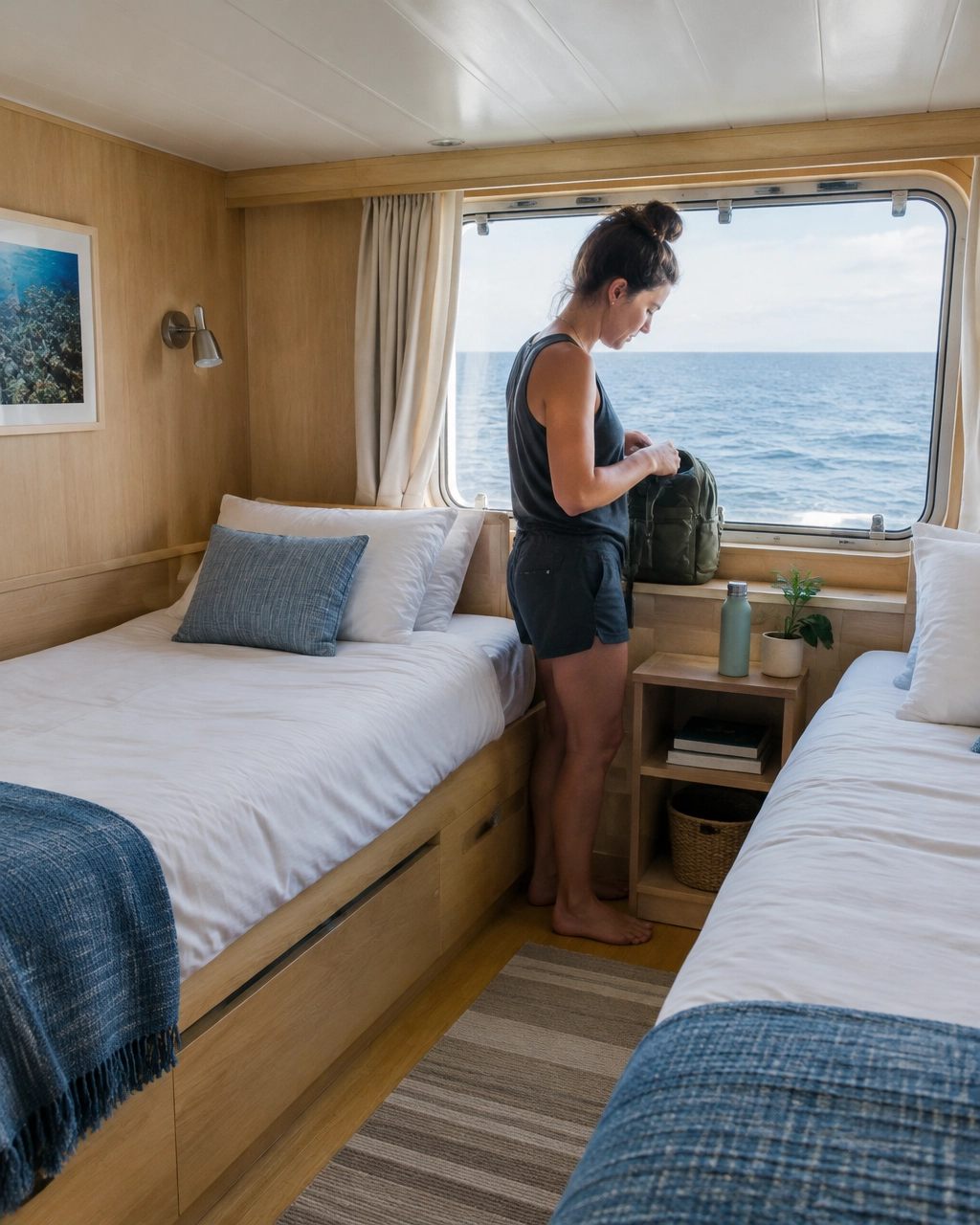
Cabins can differ in location, size, bed setup, storage, and whether they have a private bathroom. A lower fare may reflect a smaller cabin or a less convenient position on the boat.
Ask for the cabin category in writing, along with its layout and occupancy. If you’re sensitive to motion, ask where the cabin sits on the boat. A simple deck plan can make the difference between an informed choice and a surprise at boarding.
5. Ask how solo occupancy works
Traveling alone doesn’t always mean paying for an entire cabin, but policies vary. Some operators match solo travelers who agree to share; others charge a single supplement or require private occupancy.
Clarify whether a roommate match is guaranteed, what happens if no match is available, and whether the supplement changes by cabin type. If you’d rather travel with a group, ask us about departures where solo travelers can join without paying extra.
6. Check whether group booking adds value
If you’re traveling with friends, a club, or a group of buddies, ask about group terms. Depending on the departure, a group may have access to coordinated cabins, shared transfers, or other booking advantages.
Get the conditions in writing. Ask how many travelers must book, whether everyone needs to pay a deposit at the same time, and what happens if someone drops out. Then compare the group terms with the solo price and see which one suits your plans.
7. Look closely at the itinerary and dive schedule
A trip’s length doesn’t tell you everything. Compare the route, time spent at each area, number of planned dives, and any land excursions. Some itineraries focus on remote sites; others balance time underwater with island visits or surface intervals.
Also ask how the schedule may change with weather, currents, or local conditions. Check whether night dives, gear rental, and nitrox are included or optional. If you’re comparing far-flung destinations, Java Travel’s Maldives trip-planning guide offers another helpful starting point.
8. Look into the operator and crew
A sharp discount should not be your only reason to choose a boat. Read recent traveler reviews and look for consistent comments about communication, equipment, cleanliness, food, and how the crew handles changes.
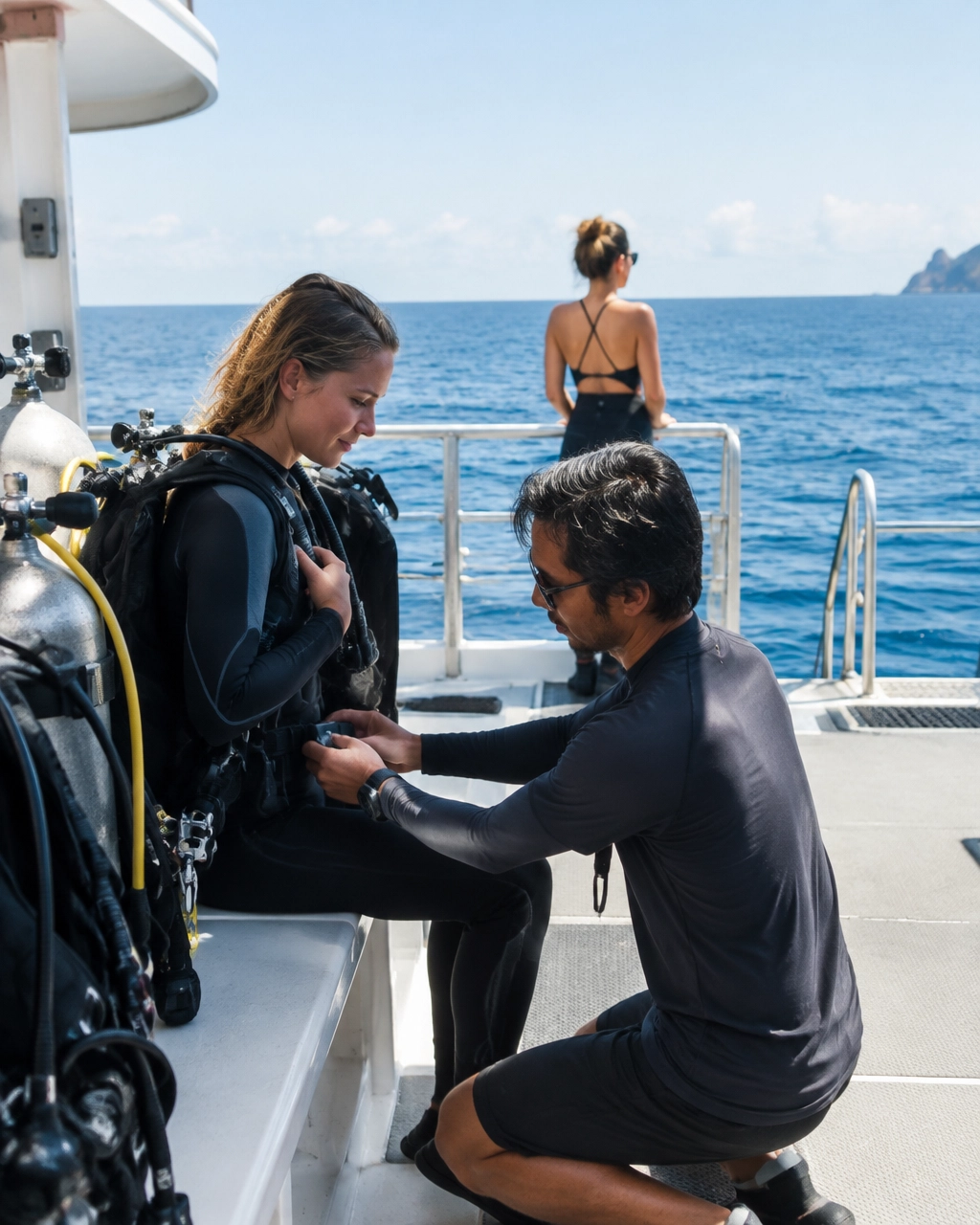
Ask how many guides typically join the dives and what support is available onboard. Check that the boat’s setup matches your comfort and experience. A thoughtful crew and clear communication can shape the trip just as much as the destination.
9. Understand cancellation terms and insurance
Before paying, read the cancellation policy and note every deadline. A deposit, a discounted fare, or a change in travel plans may affect what you can recover. Policies differ by operator and booking, so don’t assume another traveler’s terms apply to you.
Consider travel insurance that suits your trip, including medical care, evacuation, cancellation, and interruption. If you plan to dive, confirm that your policy covers your planned activities and any relevant depth limits. Review the actual policy wording, not only a summary.
10. Ask these questions before you pay a deposit
A short checklist can help you compare offers on equal terms. Before booking, ask:
- What is included in the fare, and what costs extra?
- Which cabin category is available, and what is its layout?
- How do solo occupancy and roommate matching work?
- What is the planned route, and how many dives are scheduled?
- Which fees or transfers should I budget for separately?
- What are the deposit, payment, and cancellation deadlines?
- How could weather or other local conditions change the itinerary?
Request the answers in writing, then compare the full trip cost, not only the advertised fare. That’s the clearest way to judge whether liveaboard deals deliver the experience you want.
Find a deal that fits your trip
The right choice depends on your dates, preferred destination, cabin needs, and comfort with extra costs. If you’d like help comparing liveaboard deals, email Eva Kingsley at eva@javatravelusa.net. Share the destinations and travel window you have in mind, and she can talk through options with you.
adventure beach javatravel javatravelusa liveaboard liveaboard booking liveaboard deals liveaboard diving liveaboard guide scuba diving traveling
Share Article:

Eva