JAVATRAVEL

Contact Us!
eva@javatravelusa.net
About Us
At Java Travel, we believe that travel should be more than just a vacation, it should be a story worth telling. We specialize in personalized, meaningful travel experiences for individuals, couples, families, and small groups. From tropical escapes in the Caribbean to faith-based itineraries, bucket-list cruises, and diving adventures, we help travelers explore the world with ease, confidence, and intention.
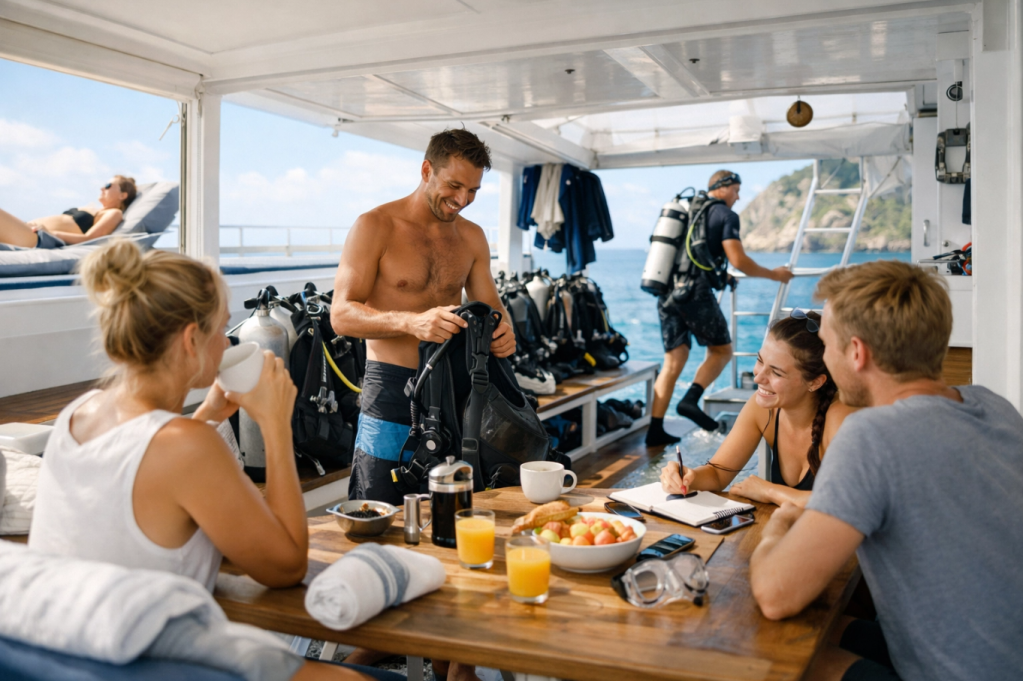
There is a specific kind of silence that only exists on the water at dawn. It isn’t the absence of sound, but rather a soft orchestration of the elements: the rhythmic lap of the tide against a steel hull, the distant cry of a sea bird, and the low, comforting hum of the boat’s generator. When you wake up on a liveaboard in 2026, you aren’t just waking up for a vacation; you are waking up to a different rhythm of existence entirely.
In this fourth installment of our Liveaboard Life Bible, we’re stepping away from the gear bags and the logistics to walk through the ephemeral, beautiful reality of a day at sea. This is the “Eat, Sleep, Dive” manifesto brought to life, where time slows down and the horizon becomes your only boundary.
The First Light and the Pre-Dive Ritual
Your day begins not with the jolt of an alarm, but often with the smell of fresh coffee drifting through the vents of your cabin. On a luxury vessel, perhaps somewhere in the new capitals of luxury diving like Raja Ampat, the crew might offer a gentle knock or a soft call through the hallway.
By 6:30 AM, you’ll likely find yourself on the deck, hands wrapped around a warm mug, watching the sun paint the sky in gradients of apricot and violet. This is the “light breakfast” hour: fruit, toast, and quiet conversation with fellow travelers who, like you, are still blinking away sleep. There is a shared sense of anticipation here. You aren’t rushing to a tour bus or navigating a crowded lobby. You are already exactly where you need to be.

The Briefing: A Map of the Unseen
Around 7:30 AM, the bell rings. It’s a sound that soon becomes the heartbeat of your trip. You gather around a whiteboard where the dive deck lead has sketched a masterpiece in colored markers: the topography of the reef you are currently floating over.
A great briefing is more than just “turn left at the coral head.” It is a story. Your guide will describe the way the current whispers through the sea fans, where the pygmy seahorses are hiding in plain sight, and how the light will hit the swim-throughs at this exact hour. As a travel concierge, we often emphasize that these briefings are where the magic starts; they turn a simple immersion into an educated exploration. You’ll check your nitrox levels, confirm your buddy plan, and head to the dive deck where your gear: meticulously prepared by the crew: is waiting.
Submerging into the Blue
The transition from the heat of the morning sun to the cool embrace of the ocean is the moment the world resets. Whether you are performing a giant stride or slipping off the back of a tender, the noise of the world above evaporates.
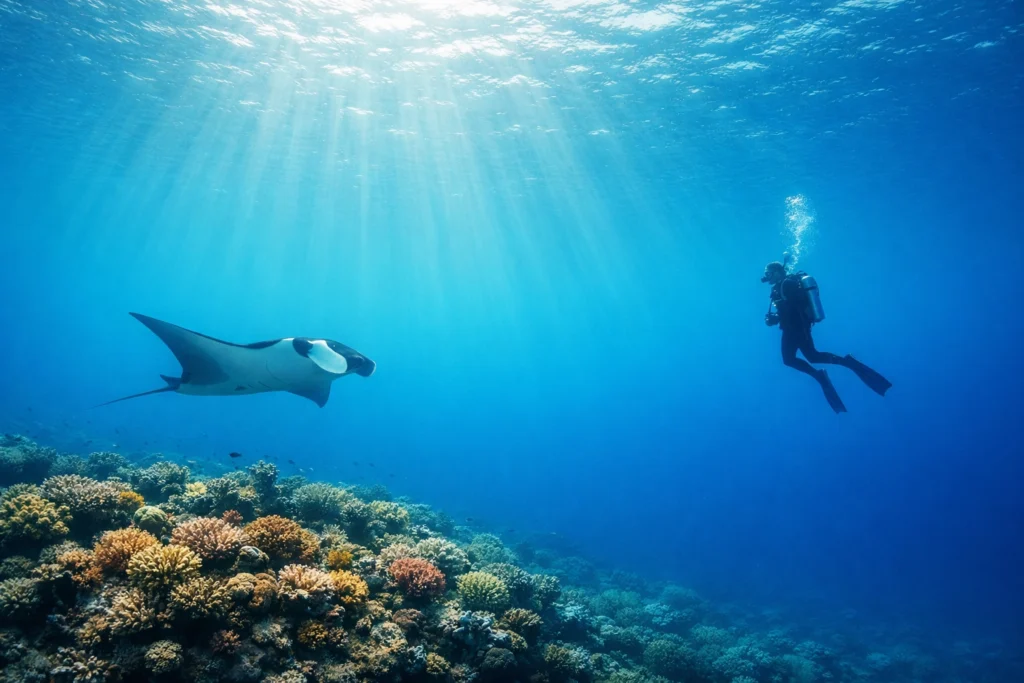
In 2026, the experience of scuba diving has leaned further into the “slow travel” movement. You aren’t there to check off a list; you are there to witness. You might spend forty minutes watching a single cleaning station where manta rays hover like celestial spacecraft, or you might drift effortlessly along a wall that drops into an infinite indigo.
The Art of the Surface Interval
Back on board, the “post-dive high” is a tangible energy. You’ll find fresh towels waiting for you and, more importantly, the “real” breakfast. This is the time for eggs, pancakes, and local delicacies.
The surface interval is an art form in itself. It is the two-to-three-hour window where the nitrogen leaves your system and the stories enter your memory. You might find a quiet corner in the shaded lounge to update your logbook, or perhaps you’ll head to the upper deck to dry off under the sun. For those who find it hard to truly unplug, this is the time to check your camera settings: perhaps ensuring you haven’t made any common lithium battery mistakes with your strobe lights before the next descent.
The beauty of the liveaboard life is that the “commute” to the next site happens while you are napping or reading. The boat moves, the scenery shifts, and suddenly you are anchored over a completely different underwater kingdom.
Midday Drift and the Second Immersion
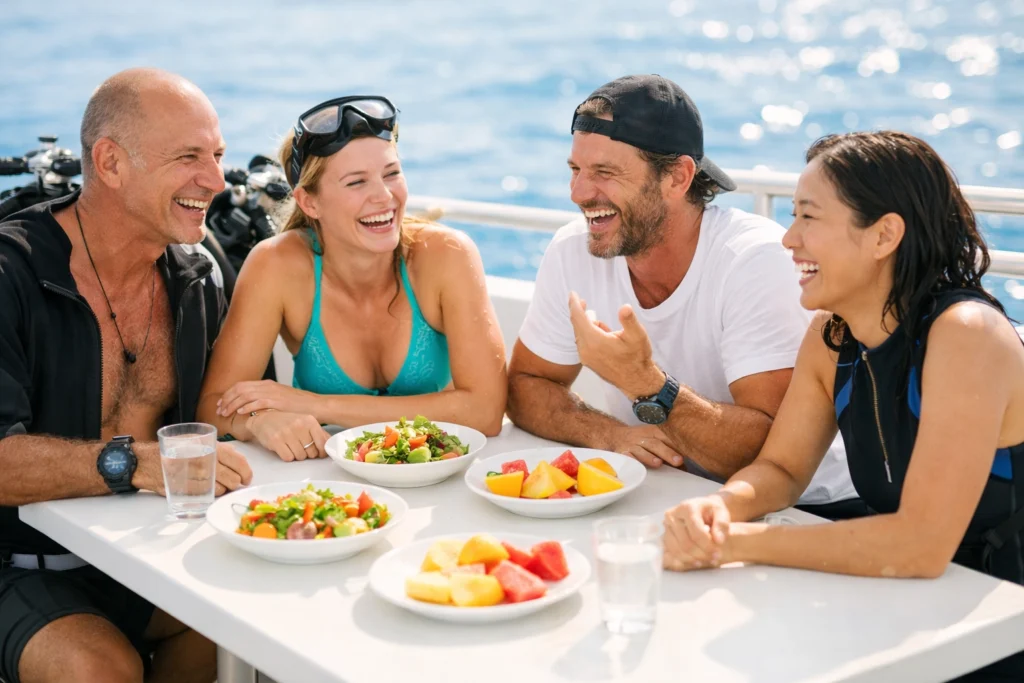
Lunch is usually served buffet-style, a vibrant spread of salads, fresh fish, and pasta designed to fuel you without making you feel heavy. On many high-end vessels, the chef will cater to every whim, ensuring that even in the middle of the ocean, your palate is as pampered as your spirit.
The second and third dives of the day often feel more relaxed. The light is higher, piercing deeper into the water column and bringing out the neon brilliance of the reef. If you’ve joined one of our exclusive group trips, this is usually when the camaraderie truly cements. You’ll find yourself laughing over a shared sighting of a rare nudibranch or a playful turtle.
The Golden Hour and the Night Whisper
As the sun begins its descent, the boat takes on a golden, honeyed glow. For many, the fourth dive of the day is the highlight: the night dive.
As you descend into the darkness with your torch, the reef transforms. The “day shift” goes to sleep, and the hunters come out. You might see basket stars unfurling their fractal arms or the glowing eyes of shrimp reflected in your light. It is a peaceful, almost meditative experience, floating in a void of black and silver.
If you prefer to stay dry, the sunset hour is dedicated to “sundowners”: a cocktail or a glass of wine on the top deck. It is a time for reflection. You’ll look out over the water and realize that you haven’t seen a car, a building, or a cell phone tower in days. This is the “Quiet Luxury” we often talk about at Java Travel USA: the luxury of true disconnection.
Dinner and the Table of Stories
Dinner is the grand finale. The table is set, the wine is poured, and the conversation flows as easily as the tide. You’ll discuss the day’s encounters, share photography tips, and listen as the crew outlines the plan for tomorrow.
There is a profound sense of safety and community on a dive boat. You are surrounded by people who share your passion, and you are looked after by a crew that anticipates your needs before you even voice them. It’s why we always suggest checking our health and safety guidelines before you go: not because the environment is dangerous, but because being prepared allows you to surrender completely to the experience.
The Sleep of the Just
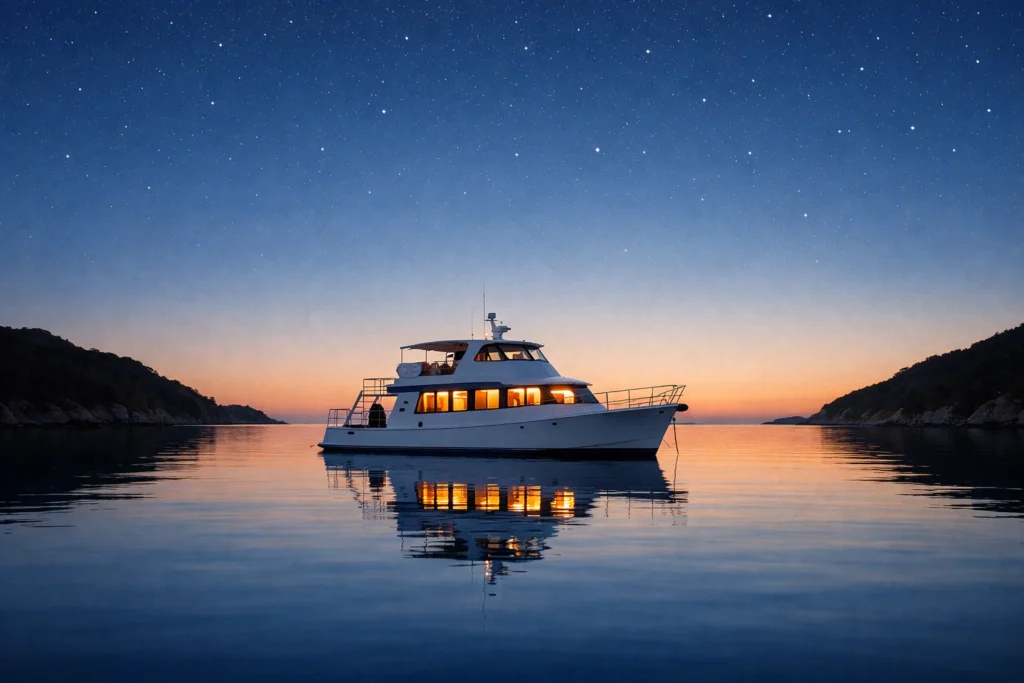
By 10:00 PM, the boat is usually quiet. The physical exertion of the day, combined with the fresh sea air, leads to a deep, restorative sleep. You’ll retreat to your cabin, perhaps catching a glimpse of the Milky Way through your porthole, and feel the gentle rocking of the vessel.
You’ll fall asleep knowing that tomorrow, you’ll wake up and do it all over again: but in a completely different part of the ocean.
Why the Logistics Matter
While this day sounds like a dream, the seamlessness of it is no accident. Behind every perfect sunset and every timed dive briefing is a mountain of logistics. From matching the right boat to your experience level to ensuring your baggage meets the stricter 2026 rules, the details are what make the “Bible” work.
As your travel concierge, our job is to handle the friction so you can focus on the flow. A liveaboard isn’t just a boat; it’s a floating sanctuary. And once you’ve lived a day in this life, the shore will always feel just a little bit too still.
Are you ready to find your rhythm at sea? In our next post, we’ll be tackling the unwritten rules of the boat: from tipping etiquette to how to be the guest everyone wants back on board. Stay tuned to the Liveaboard Life Bible.
4. A Day in the Life: What to Actually Expect When You Live on a Dive Boat scuba diving scuba diving liveaboard promo deals Travel Tips
Share Article:

Java Travel