JAVATRAVEL

Contact Us!
eva@javatravelusa.net
About Us
At Java Travel, we believe that travel should be more than just a vacation, it should be a story worth telling. We specialize in personalized, meaningful travel experiences for individuals, couples, families, and small groups. From tropical escapes in the Caribbean to faith-based itineraries, bucket-list cruises, and diving adventures, we help travelers explore the world with ease, confidence, and intention.
For memorable Florida wreck diving, make Pensacola your starting point. The Pensacola diving scene pairs remarkable shipwrecks with a welcoming beach town, and the Florida Panhandle Shipwreck Trail Passport gives you a fun way to log your dives along the coast.
The trail features 12 shipwrecks offshore of Pensacola, Destin, Panama City, and Port St. Joe. It was created by the Underwater Archaeology Team of the Bureau of Archaeological Research, Florida Department of State, in partnership with Panhandle waterfront communities. The project aimed to stimulate tourism after the 2010 Deepwater Horizon oil spill.
How the Florida Panhandle Shipwreck Trail Passport works
The passport turns a series of dives into a trail-wide collection. You can start at any destination and build your log one wreck at a time.
- Get an official passport. Participating dive shops and charter operators offer the passport. Ask about availability before your trip.
- Choose a trail wreck and arrange your dive. Wrecks vary in depth, so match the site to your training, experience, and comfort level.
- Fill in the log for that wreck. Each passport page includes a space to record your dive.
- Collect the official sticker. A sticker validates each completed wreck entry.
Before you set out, visit the Florida Panhandle Shipwreck Trail website. You’ll find underwater videos of the wrecks, local dive shop information, and marine weather forecasts. Conditions and site access can change, so check current details before heading out.
Pensacola diving: five wrecks to add to your log
Pensacola’s five trail wrecks offer different histories, depths, and underwater scenery. Some are better suited to experienced divers, while others provide a shallower setting for practice with the right training and supervision.
USS Oriskany: the iconic “Mighty O”
The USS Oriskany is an aircraft carrier that served in the Pacific. Sunk in 2006, it is recognized as the largest artificial reef in the world and ranks among the most popular dive destinations in the world.
This is a serious wreck dive, with the structure beginning far below the surface. Treat the site as an advanced dive and follow your operator’s guidance on experience requirements. See the trail’s USS Oriskany page before you go.
YDT-14: a Navy dive tender
YDT-14 was a U.S. Navy dive tender sunk in 2000. Its upper structure lies at about 60 feet, while the wreck extends deeper. That depth range makes it important to plan the dive around your qualifications and comfort.
San Pablo: a freighter with a surprising story
The San Pablo once hauled fruit from Central America. During World War II, a U-boat sank it; later, a secret military operation blew it up off Pensacola. Today, its wreckage offers a glimpse into a layered maritime history, with marine life among the remains.
Pete Tide II: three decks and schooling fish
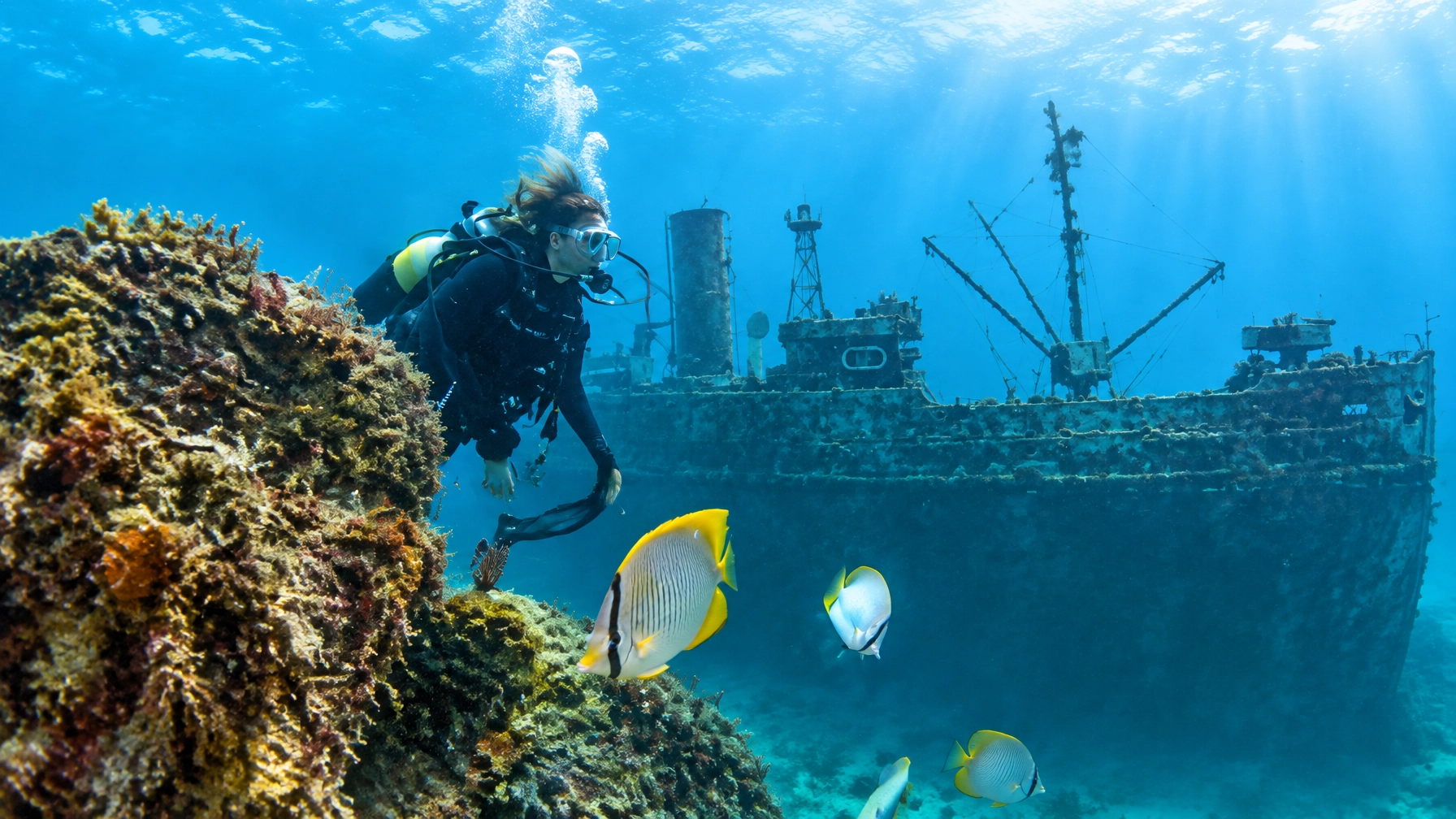
The Pete Tide II served as an offshore oilfield supply vessel before becoming an artificial reef in 1993. Its three decks of superstructure teem with schools of fish, and the wreck sits deep enough that you should discuss the dive profile with your charter operator.
Three Coal Barges: a shallower practice site
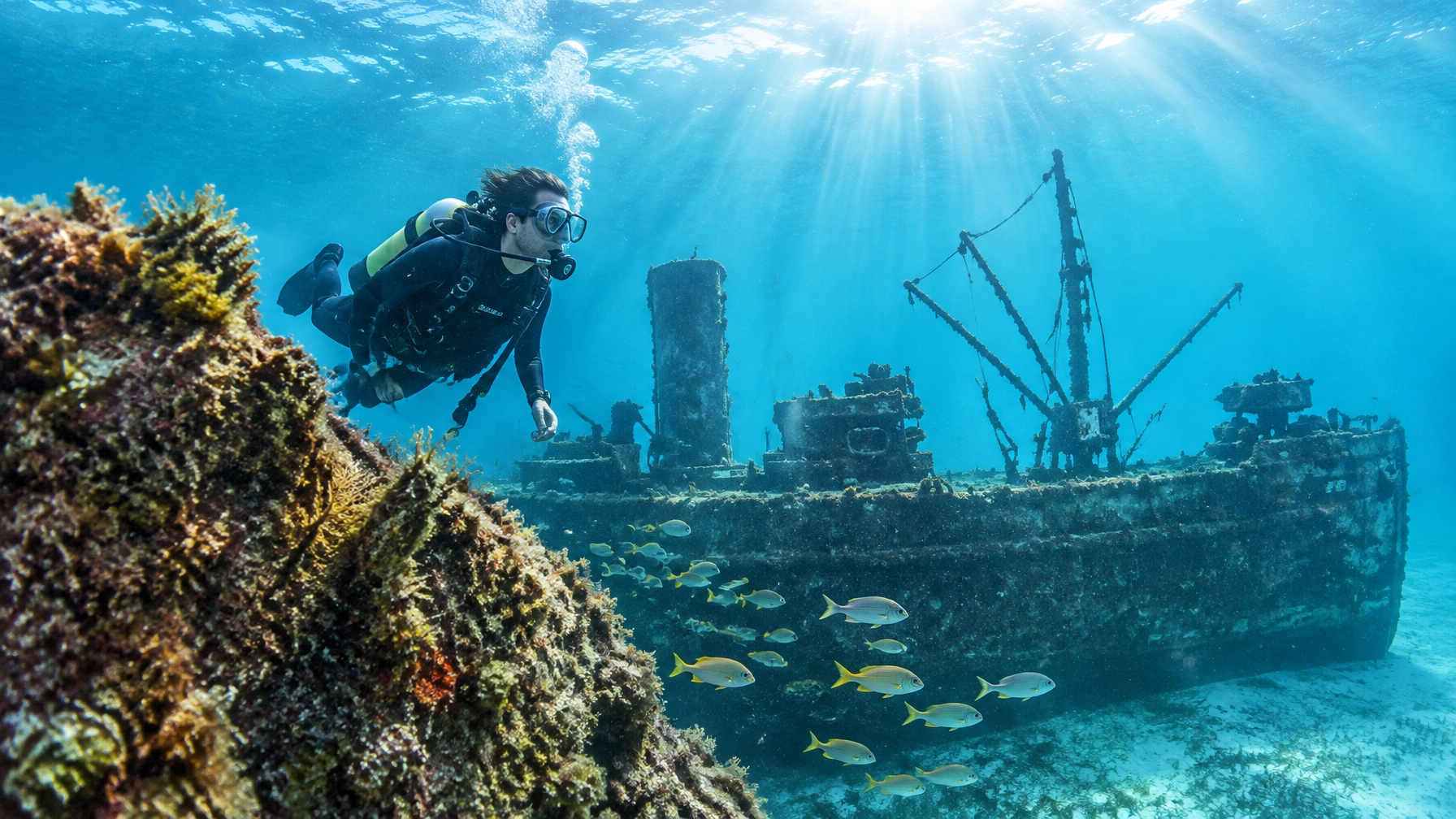
The Three Coal Barges sank in 1974 and now lie in shallow water. Their site is a good place for divers to practice skills, provided it fits their training and the day’s conditions.
More trail stops beyond Pensacola
The trail also invites you to explore wrecks in other Panhandle communities.
- Destin: The Miss Louise is a shallow, upright tugboat that can suit novice divers.
- Panama City: Visit Black Bart, FAMI Tugs, USS Accokeek, USS Strength, home to a resident goliath grouper, and USS Chippewa.
- Port St. Joe: The Vamar rests in only 25 feet of water. It once supported Admiral Richard Byrd’s 1928 Antarctic expedition and sank mysteriously in 1942.
Each site has its own character. Check the trail’s interactive website for videos and local resources as you plan your route.
Choosing a wreck and planning for conditions
There isn’t one best season for every Panhandle dive. Weather, sea conditions, visibility, and operator schedules can vary, so check the forecast and confirm site access close to your travel dates.
Depth is another key part of the decision. The Oriskany is a demanding, advanced dive. In comparison, the Three Coal Barges offer shallower water for practicing skills. Other sites fall between those examples or combine a shallower structure with a deeper bottom. Review your certification and recent experience with the dive operator before booking.
You may see abundant marine life across the wrecks. At the Pete Tide II, schools of fish add movement around the decks. Bring a camera if you like, but keep your attention on your buddy, dive plan, and surroundings.
Book Pensacola diving with Viking Diving
For local guidance, Viking Diving is a Scuba Schools International (SSI) dive center in Pensacola with more than 30 years of experience. It’s located at 3009 Barrancas Avenue, is a DAN member, and is fully insured.
Viking Diving runs local two-tank boat charters with tanks and weights included. A certified divemaster or instructor leads each trip, with a maximum 6:1 diver-to-guide ratio. Options include in-shore reef dives on weekends, mid-shore dives on Fridays, and off-shore dives to sites such as the Oriskany on select Saturdays. Schedules and access can change, so confirm details directly.
The dive center also offers courses from entry-level through professional training, along with international dive travel. Explore Viking Diving’s dive trips to learn about current charter options and travel plans. You can contact the team at info@vikingdiving.com or (850) 916-3483 to ask about a charter and arranging your wreck dive passport.
Make it a Pensacola weekend
Give yourself time to enjoy Pensacola above the water, too. Build a simple weekend around your dives: arrive, settle in, and check conditions; head out with your charter when the schedule and weather align; then leave room for a relaxed meal and beach time between dive days.
The contrast is part of the appeal. One moment, you’re looking across bright Gulf water from shore. The next, you’re descending toward a wreck shaped by history and now surrounded by marine life. Keep your plans flexible, especially when sea conditions affect access. Local conditions can also change after storms, so confirm that sites are open before you travel.
Start planning your Florida wreck diving trip
The Panhandle Shipwreck Trail makes it easy to turn a Pensacola visit into a wider wreck-diving adventure. Start with the sites that match your experience, log each dive in your passport, and explore other trail towns when your schedule allows.
For help planning a Florida Panhandle dive trip, or to get your wreck dive passport arranged with Viking Diving, email Eva Kingsley at eva@javatravelusa.net.
adventure florida panhandle shipwreck trail Florida Wreck Diving Panhandle Shipwreck Trail Passport scuba diving Travel Travel Tips traveling
Share Article:

Eva